

VISA: User experience enhancement
Science cluster & challenges


Summary
The project VISA: User experience enhancement aims to improve the way scientific research is conducted by addressing the challenges posed by the growing volume of experimental data and the increasing complexity of data processing. VISA, the Virtual Infrastructure for Scientific Analysis, is an innovative solution that enables remote access to data, hardware resources, and preinstalled software tailored for specific data treatments. The project aims to enhance user experience by optimising streaming solutions and improving fluidity, session management, security, and internationalisation of VISA, while engaging with the scientific community in the refinement process. In its upgraded version, VISA remains adaptive and user-centric, ultimately facilitating groundbreaking scientific discoveries.
Challenge
Open Science project, Open Science Service, Main RI concerned
The main challenge addressed by the project is the growing volume of experimental data and increasing complexity of data processing.
Solution
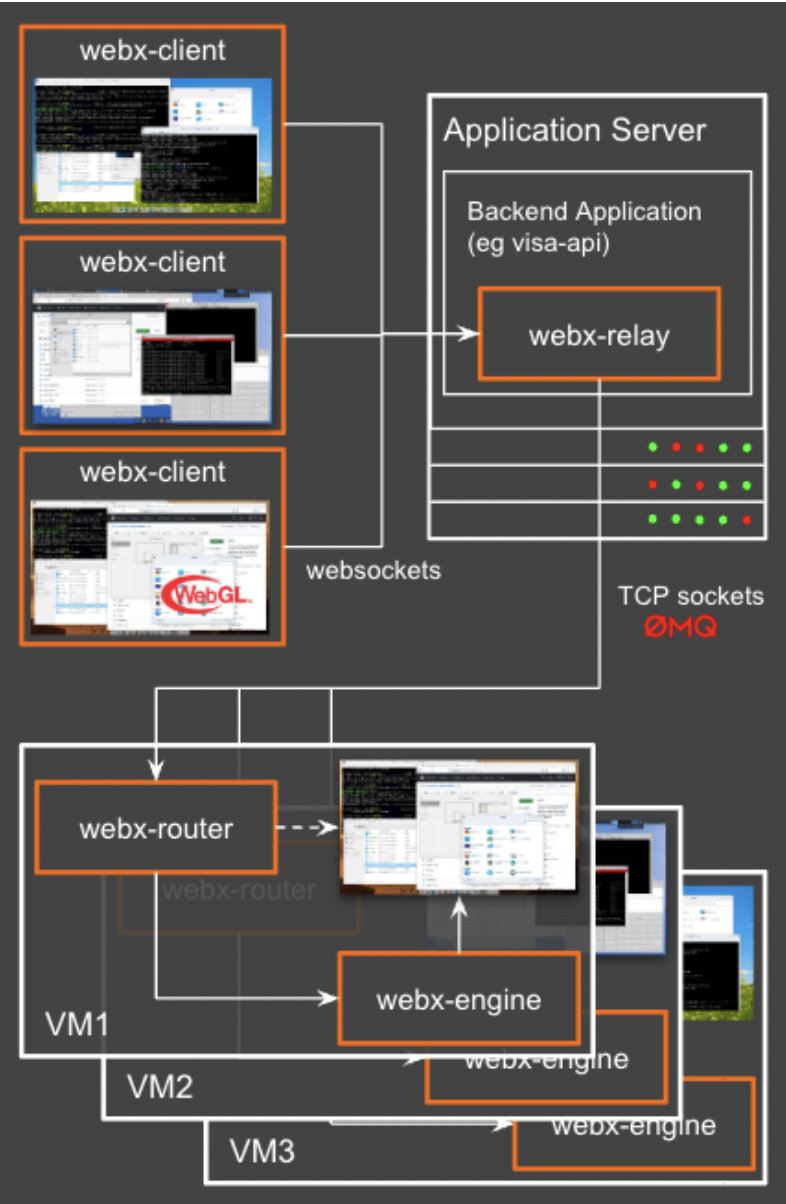
The project plans to maintain and optimise VISA, enhancing user experience. Initial research will pinpoint crucial technologies, with a focus on evaluating WebX's performance and user feedback, and comparing it with other notable tools like OpenBroadcastSolution, and Streamlabs OBS. The selection of the technology will be critical, taking into account licensing, potential need for redevelopment, and alignment with the project goals. Following the research and development phase, the industrialisation process will follow. This phase includes the integration of the chosen solution into VISA, addressing session management, security enhancements, performance improvements, and tackling the intricacies of internationalisation, particularly the nuanced challenges of keyboard management. It is expected that the solution not only integrates seamlessly but also resonates with the diverse needs of our global user community.
Scientific Impact
The adoption of the VISA solution has revolutionised the way the PaN scientific community conducts research by facilitating remote experiments through a web browser. This innovation not only saves travel time but also accelerates the setup process for experiments, as the environments are pre-configured and ready for use. Moreover, it fosters collaboration, enabling multiple researchers to work simultaneously on virtual machines via their browser.
VISA will foster streamline research activities, enhance productivity, and potentially lead to faster scientific breakthroughs. Improved collaboration and accessibility may encourage a broader spectrum of interdisciplinary projects, driving innovation and knowledge expansion in various scientific domains.
Results
- The final version of WebX was released in February 2026 in time for the March 2026 startup of the ILL reactor. The European Synchrotron Radiation Facility has similarly been active in bringing WebX to its production environment and has helped in providing feedback since the middle of 2025.
- User feedback from WebX has been very positive with notable improvement to latency and visual quality of remote desktops in line with the goal of achieving an equivalent data analysis environment to that of a local machine.
- All components of WebX software are fully open source (under GPL-3.0 and BSD-3-Clause licenses) and available on the ILL GitHub page. A demo of the full WebX remote desktop technology is available and can be easily launched using a Docker environment to evaluate its behaviour and features.
Events
- 23 May, 2025 | Online - PaNOSC-OSCARS projects mentorship meeting
- 2-3 June, 2025 | Barcelona, Spain - PaN Facilities VISA meeting 2025 | Presentation
Principal investigator

IT development team manager at Institut Laue Langevin